Bayous Near New Orleans: A Visitor's Atlas to Manchac, Maurepas, Barataria and Honey Island
Four wild waters sit within an hour of the French Quarter, and each one is a different trip: a kayak channel through recovering cypress, a pontoon ride past alligators, a national park bayou under construction, and a 70,000-acre swamp that is one of the least-altered in the country.
Short answer
The bayou waters you can realistically visit from New Orleans are Manchac Swamp near LaPlace, Maurepas Swamp west of the city, the Barataria bayous in Marrero and Jean Lafitte, and Honey Island Swamp near Slidell. Boat tours start at $30 per person, kayak trips at $49, and the closest launch is about 27 miles from downtown.
Four names dominate every conversation about wild water within reach of New Orleans: Manchac, Maurepas, Barataria and Honey Island. They are not interchangeable. One is a 20-minute drive from the airport, one is the centerpiece of a $300 million river restoration, one sits inside a national park that is currently under construction, and one is a 70,000-acre swamp that still has no pipelines or oil platforms running through it. This guide walks through each water in turn, with what it is, how to get on it, and the bookable trip that suits it best. If you want the short version of which tour fits which water, the New Orleans Swamp Tours homepage lines up all nineteen trips side by side.
What Is the Difference Between a Bayou and a Swamp?
A bayou is a slow, narrow waterway, often a distributary or dead-end channel, while a swamp is the wetland ecosystem those channels flow through, and around New Orleans the two are so tangled together that a single morning can cross from one to the other several times. A bayou is defined by moving, or at least standing, water in a channel. A swamp is defined by trees growing in that water, usually bald cypress and tupelo gum. That is why locals say a bayou runs through a swamp, and why the practical answer for a visitor is simpler than the dictionary one: you will see both on any tour here, from the same boat.
The two words get used loosely because the landscape itself refuses to keep them apart. Bayou Manchac, for instance, is a channel; Manchac Swamp is the flooded forest on either side of it. Bayou des Familles is the water you cross on the boardwalk approach to the Barataria Preserve, and the swamp spreads out beyond it. For a longer walk through the vocabulary, including where marshes and wetlands fit in, see the difference between a swamp and a bayou.
One distinction does matter for planning. Some waters here are big, open and motorboat country: Barataria and Honey Island are pontoon and airboat waters, with fleets of covered boats and captains who narrate over an engine. Others are narrow, shallow and quiet: the interior channels of Manchac and Maurepas are kayak country, where the engine noise would be the whole point of the trip working against you. Choosing a water and choosing a vessel are really the same decision, and the sections below pair them accordingly.
It also helps to know that these four waters sit in two different basins. Manchac and Maurepas belong to the Lake Pontchartrain and Lake Maurepas system north and west of the city. Barataria and Honey Island belong to separate drainages south and east of it, with Honey Island feeding the Pearl River along the Mississippi state line. Different basins mean different water colors, different wildlife patterns and different drive times, which is exactly what the rest of this guide sorts out.
Which Bayous and Swamps Are Within Reach of New Orleans?
Four waters sit within about an hour of the French Quarter: Manchac Swamp, 27 miles from downtown near LaPlace; Maurepas Swamp, roughly 30 miles west of the city; the Barataria bayous in Marrero and Jean Lafitte on the west bank; and Honey Island Swamp near Slidell, about 45 minutes away. All four run daily tours, all four are reachable without a rental car if you book transport, and each one has a distinct character. The table below is the short version of the whole atlas.
| Water | Basin | Closest launch | Character | Typical vessel |
|---|---|---|---|---|
| Manchac Swamp | Lake Maurepas / Pontchartrain | 110 Frenier Road, LaPlace | Narrow cypress channels, ghost swamp folklore | Covered pontoon or kayak |
| Maurepas Swamp | Lake Maurepas | Roadside launch, coordinates given after booking | Huge recovering cypress forest, quiet paddling | Kayak only |
| Barataria / Bayou des Familles | Barataria Basin | 6601 Leo Kerner Lafitte Parkway, Marrero | Wide tidal bayous, national park edge | Covered pontoon |
| Honey Island Swamp | Pearl River | 55345 US-90, Slidell | 70,000-acre untouched river swamp | Covered pontoon |
Distances matter less than they appear to. Cajun Pride's launch at Frenier Road is 27 miles from downtown and about 15 minutes from the airport, which makes Manchac the practical choice for anyone with a morning flight or a tight schedule. Honey Island is the longest drive but carries the strongest reviews in the entire niche: the Cajun Encounters boat tour with transport holds a 4.9 rating from 7,119 reviews, the deepest review pool of any swamp trip around the city.
Seasonality cuts across all four waters rather than between them. Alligators are the headline wildlife, and they are cold-blooded: they bask openly on warm sunny days and disappear when the water drops below roughly 70 degrees Fahrenheit. If your dates are fixed, the timing question is worth a separate look in the best time for a swamp tour.
For scale, the infographic below puts the four waters next to each other by protected size. Honey Island's 70,000 acres, roughly half of them protected, dwarf the tour corridors you actually travel through, and the Maurepas restoration footprint alone covers about 45,000 acres of benefit area.
Manchac Swamp: The Closest Wild Water to the City
Manchac Swamp is the flooded cypress forest around Bayou Manchac and the Manchac Pass area near LaPlace, 27 miles from downtown New Orleans, and it is the water you reach fastest, with covered pontoon departures at 9:30 AM, 12:00 PM and 2:15 PM daily plus a seasonal 4:15 PM run. The launch at 110 Frenier Road sits at the edge of the Maurepas Swamp Wildlife Management Area, and the boats push straight into narrow, moss-draped channels where the cypress grow close enough to touch from the rail. It rains or shines here: only lightning cancels a departure, and the fleet runs covered boats so weather is rarely a factor.
The folklore is half the draw. Manchac is the setting of the ghost swamp stories around the vanished town of Frenier, and the narrated tours lean into that history between alligator sightings. The wildlife is the other half: alligators, herons, egrets, nutria and the owls that roost in the cypress knees at the waterline. The operator keeps live-animal encounters with permitted handlers at the dock, and one boat in the fleet is wheelchair accessible if you advise at booking.
| What it is | Flooded bald cypress and tupelo swamp around Bayou Manchac, at the edge of Maurepas Swamp WMA |
|---|---|
| How to get on it | Covered pontoon cruise from 110 Frenier Road, LaPlace, or a 4-hour small-group kayak tour with shuttle |
| Drive-up timing | Arrive 30 minutes early; shuttle guests are picked up 1.5 hours before departure |
| Closures | Mardi Gras (Fat Tuesday), Thanksgiving Day, Christmas Day |
| Bookable trips | Manchac covered swamp cruise from $35, or the Manchac Wildlife Kayak Tour |
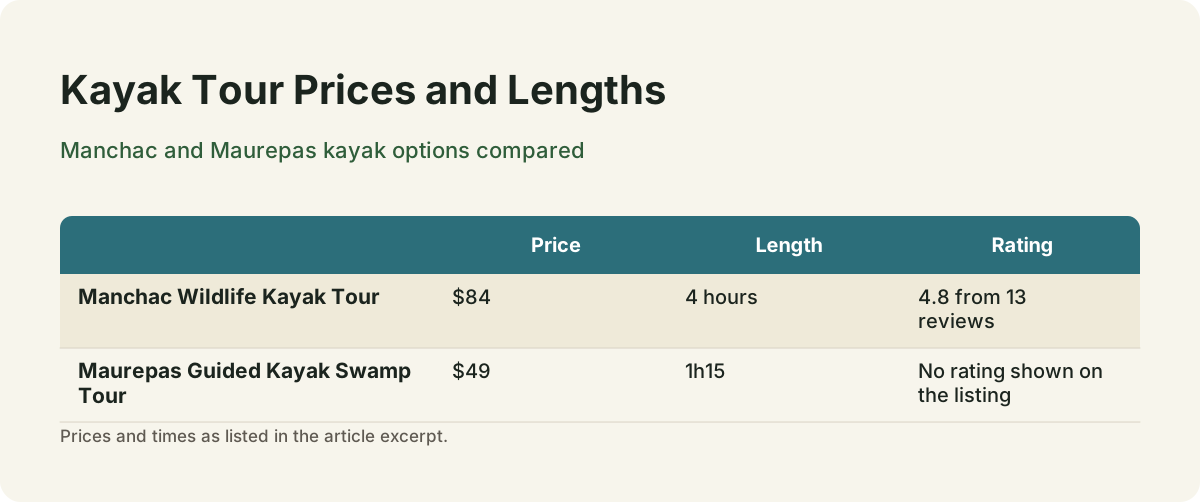
The kayak option here is the one worth singling out. The Manchac Wildlife Kayak Tour from New Orleans Kayak Swamp Tours runs about 4 hours in a small group, paddling the same swamp the pontoons cruise but through the narrow interior channels the big boats cannot enter. It carries a 4.8 rating from 13 reviews, a small pool but a consistently strong one, and the operator is one of only two permitted eco-tourism kayak operators on Maurepas Swamp WMA, per the Louisiana Department of Wildlife and Fisheries. A $25 round-trip shuttle from 740 North Rampart Street covers the roughly 30-mile drive, and 100 percent of the price is refundable if you cancel more than 48 hours out.
Maurepas Swamp: Kayaks and a River Coming Back
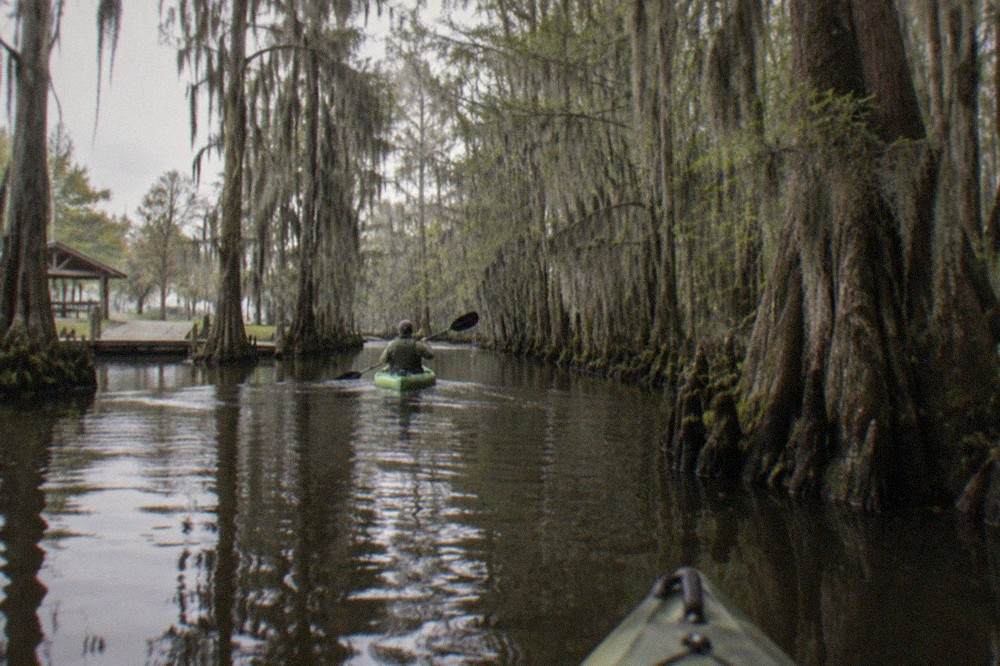
Maurepas Swamp is the vast cypress-tupelo forest west of the city around Lake Maurepas, and it is in the middle of the largest restoration story on this list: a $300 million project to reintroduce Mississippi River water through Hope Canal, delivering up to 2,000 cubic feet per second of freshwater to benefit roughly 45,000 acres, with completion expected in 2030. Decades of levees cut this swamp off from the river that fed it, and the trees have been slowly starving for sediment and freshwater ever since. The reintroduction is designed to reverse that, and construction is ongoing on Reach 6 near Hope Canal with Phase 1 anticipated complete by early 2026, per the Coastal Protection and Restoration Authority.
For a visitor, Maurepas is paddling country, full stop. There is no pontoon fleet here and no airboat dock; the access is a roadside boat launch on the edge of the wildlife management area, about 30 miles west of New Orleans, with no street address. The exact coordinates are emailed after booking, and the operator's shuttle from the French Quarter is the practical way in. The launch itself is noted as busy with commercial groups, and the state lists New Orleans Kayak Swamp Tours and Wild Louisiana Tours as the current permitted kayak operators on the WMA.
| Trip | Price | Length | Rating | Notes |
|---|---|---|---|---|
| Manchac Wildlife Kayak Tour | $84 | 4 hours | 4.8 from 13 reviews | Small group, 8+ years old, $25 shuttle |
| Maurepas Guided Kayak Swamp Tour | $49 | 1h15 | No rating shown on the listing | Beginner-friendly, shorter paddle |
| Self-guided rental | Varies by season | Your call | Not applicable | For experienced paddlers only |
The $49 guided kayak tour is the gentlest entry point in the whole niche: 1 hour 15 minutes on flat water, beginner-friendly, and priced at the floor of every trip on this site. Its listing carries no rating, which is worth saying plainly rather than papering over: it is a newer, shorter product without the review history of the big boat tours. If you want the full immersion, the 4-hour Manchac Mystic paddle from the same operator covers 3 to 4 miles of the same WMA and is the one most first-timers remember.
One quirk of the calendar matters if you are paddling in winter. For the season running November 1 through January 31, internal combustion engine vessels are prohibited on Manchac WMA and designated areas of Maurepas Swamp WMA from noon to 4 AM, a rule aimed at hunting-season pressure and waterfowl disturbance. In practice that makes winter mornings the quietest water in the state: no airboats, no pontoon engines, just paddles and bird calls.
Barataria and Bayou des Familles: The National Park Water
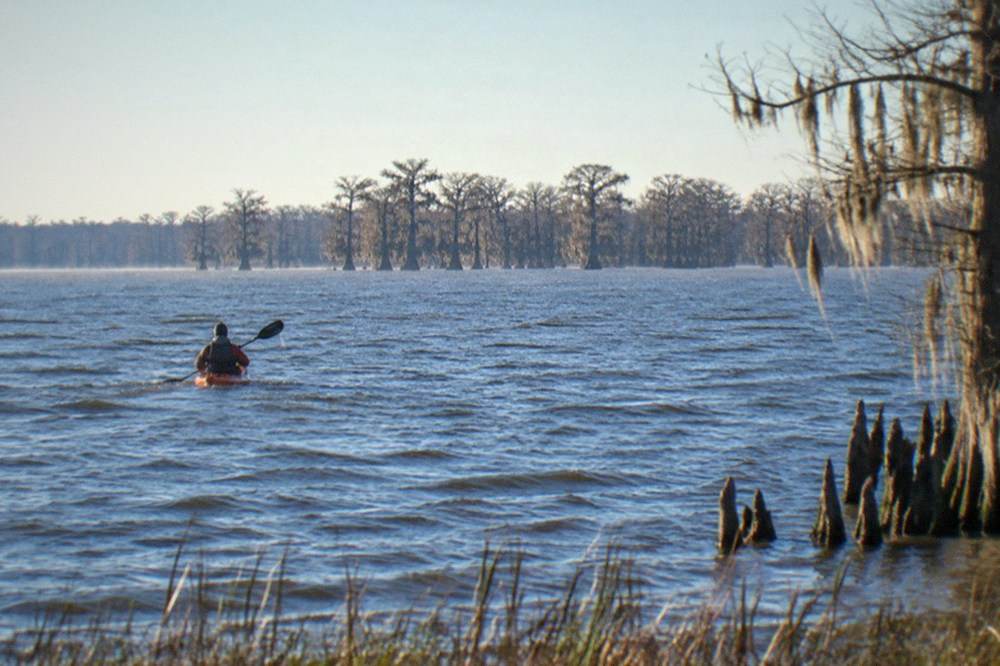
The Barataria bayous, including Bayou des Familles on the approach, are the wide tidal channels at the edge of Jean Lafitte National Historical Park and Preserve, reached from Marrero on the west bank, and they are the water with the biggest asterisk right now: the Barataria Preserve's visitor center and most of its trails have been closed since February 2, 2026 for Hurricane Ida repair construction, expected to take about two years. The commercial swamp tours are not affected. They run from private launches outside the closure, on the same water, and they run every day. What is closed is the park's own boardwalk network and the visitor center, per the National Park Service alerts page.
That distinction confuses a lot of visitors, so it is worth being blunt about it. If your plan was to walk the preserve's boardwalks and see the swamp for free, that plan needs a rewrite; the full comparison is laid out in Barataria Preserve versus a swamp tour. If your plan was a boat ride through the bayous, nothing has changed. The park has moved its visitor services to the Louisiana Wetland Education Center at 4917 City Park Drive in Jean Lafitte, where rangers are present Wednesdays and Thursdays from 10 AM to 2 PM with a 1 PM guided walk on the Wetland Trace trail, which stays open daily.
| What it is | Wide tidal bayous and flooded forest at the edge of the Barataria Basin, inside and beside Jean Lafitte NHP&P |
|---|---|
| How to get on it | Covered pontoon tours from private launches on Leo Kerner Lafitte Parkway, Marrero |
| Bookable trips | Bayou Wildlife Tour from $30, or the Swamp Tour Boat Adventure from $35 |
| Park status | Preserve trails and visitor center closed for construction; tours unaffected |
| Nearby stop | Louisiana Wetland Education Center, open Tues-Sun 10 AM-4 PM, $10 adults |
The Barataria boat trips are the best value on this list. The Bayou Wildlife Tour from Adventures of Jean Lafitte starts at $30 with a 4.5 rating from 1,615 reviews, and the Louisiana Tour Company's Swamp Tour Boat Adventure from the same area runs 1 hour 40 minutes from $35 with a 4.9 rating from 2,275 reviews, the operator running the largest covered-boat fleet in the niche. The water here is wider and more open than Manchac, the alligators are plentiful on warm days, and the drive from downtown is a straight shot down the west bank.
The restoration backdrop is worth knowing even if you never see it directly. The Upper Barataria Marsh Creation Project built 1,170 acres of new wetland habitat in the basin, and a year later NOAA Fisheries reported shrimp and crab returning to the area. The larger Mid-Barataria Sediment Diversion was canceled by the state in 2025, which reshaped the basin's long-term restoration plan, but the marsh creation projects are already producing visible wildlife results in the same water the tour boats cross.
Honey Island Swamp and the Pearl River Bayous
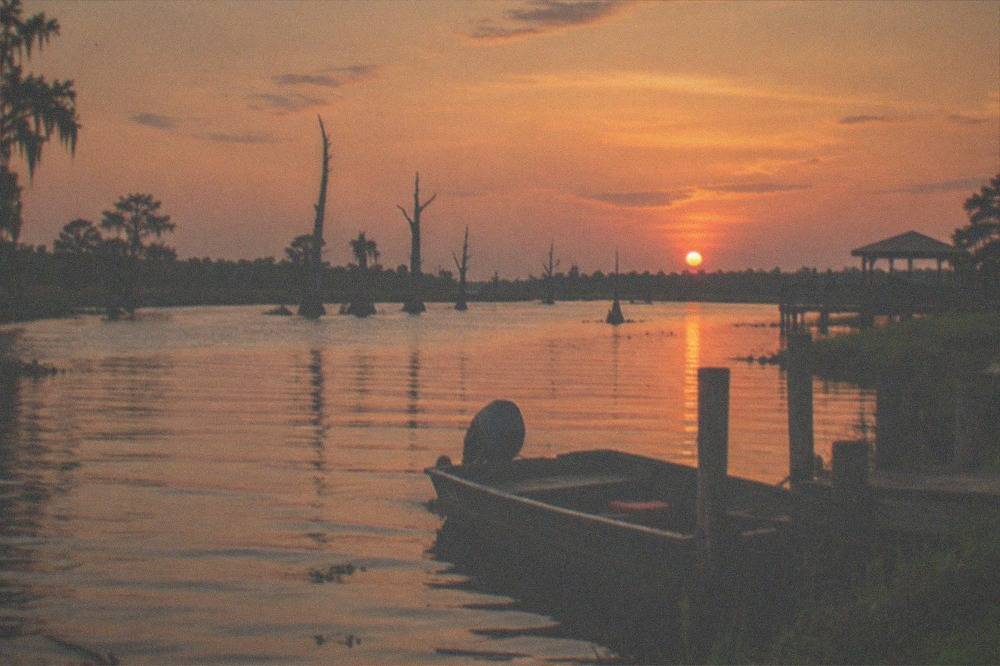
Honey Island Swamp is a roughly 70,000-acre river swamp in the Pearl River basin near Slidell, about 45 minutes from New Orleans, and it is widely described as one of the least-altered river swamps in the United States, with no pipelines or oil platforms and about half its acreage under protection. The tours launch from 55345 US-90 in Slidell, run roughly two hours on the water, and pass alligators, bald eagles, herons and the prohibition-era "Whiskey Tree" landmark. On busy days the swamp sees more than 1,000 visitors, and it earns them: this is the water that shows up in almost every list of Louisiana's essential landscapes.
The review numbers here are the strongest in the entire niche. The Cajun Encounters boat tour with round-trip transport from the French Quarter holds a 4.9 rating from 7,119 reviews at $75.52, and the same operator's self-drive version is $38 with a 4.9 from 232 reviews. Dr. Wagner's, running from the same launch since 1982, prices its two-hour boat tour at $39.99 adult and $28.99 child under 12, or $69.99 and $48.99 with round-trip transport, with departures at 9:30 AM, 12:15 PM, 2:45 PM and 5:00 PM daily except major holidays.
| What it is | 70,000-acre untouched Pearl River basin swamp, about half protected |
|---|---|
| How to get on it | Two-hour narrated boat tours from 55345 US-90, Slidell, daily |
| With transport | Pickup from designated downtown points; guests 11 and under pay the child rate |
| Wildlife | Alligators, black bears, wild hogs, bald eagles, herons, the endemic ringed map turtle |
| Bookable trips | Honey Island boat tour with transport, self-drive boat tour, or Dr. Wagner's from the same dock |
Honey Island also carries the niche's best folklore. The Honey Island Swamp Monster stories are decades old and still drawing curious visitors, and the swamp's genuine megafauna, black bears and wild hogs among them, does the rest. The Skeptoid podcast devoted an episode to the monster legend in September 2026, alongside the real animals, which tells you the legend is still very much alive. For the full story, including why this swamp kept its monster while others lost theirs, see the Honey Island Swamp Monster.
The one planning wrinkle is water level. The adjacent Pearl River Wildlife Management Area, about 35,619 acres, closed temporarily in late May and again in June 2026 when flooding put water over the access roads, and Old Highway 11 closes whenever the Pearl River gauge at Pearl River town hits 16.5 feet. The swamp tour launches themselves are not affected by these road closures, and the river has run at normal late-summer levels since, but a spring visit after heavy rain is worth a quick conditions check before you drive.
How to Pick the Right Bayou for Your Day
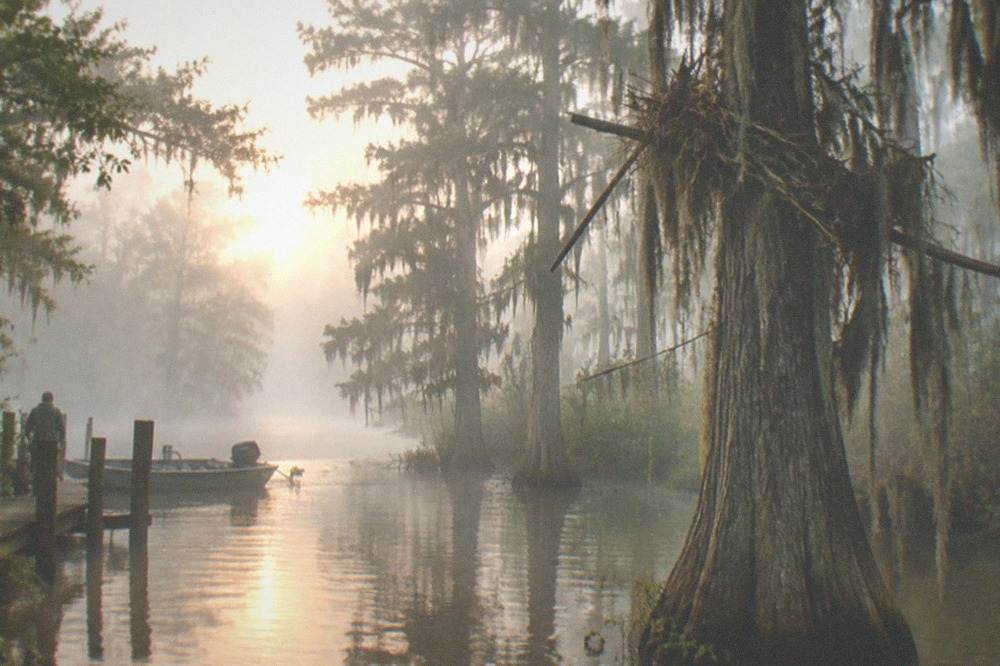
Match the water to your priorities: Manchac for the shortest drive and the folklore, Maurepas for quiet paddling and the restoration story, Barataria for the lowest price and the biggest boats, and Honey Island for the deepest review pool and the wildest landscape. If you have one morning, drive to Manchac or take a Honey Island transport tour. If you have a full day and want photographs, take the kayak. If you are traveling with small children or grandparents, take a covered pontoon on any water and let the captain do the work.
Budget and transport are the two practical filters. Drive-up prices across the four waters run from $30 at Barataria to $75.52 for Honey Island with round-trip transport from the French Quarter, and every operator on this page either includes or offers a shuttle, so a rental car is optional everywhere. The trade is time: transport adds roughly an hour each way in pickup windows and driving, which is why the self-drive Honey Island option at $38 exists for people with cars.
The vessel question is really a comfort question, and it has its own full treatment in airboat versus boat swamp tours. The short version for this atlas: kayaks buy silence and access, covered pontoons buy shade, seating and predictability, and airboats, which run from Lafitte and Marrero rather than the four waters profiled above, buy speed. Families weighing age limits and attention spans will find the age-by-age breakdown in a New Orleans swamp tour with kids.
Whichever water you choose, book the departure time with the sun in mind. Morning tours get cooler air, more bird activity and flatter light for photographs; midday runs get the basking alligators that come out when the sun is high. The 4.8-rated kayak operators and the 4.9-rated boat fleets all run both, so the calendar is yours to work with.
Common Questions About Bayous Near New Orleans
What is the difference between a bayou and a swamp?
A bayou is a slow or standing channel of water; a swamp is the flooded woodland that channel runs through. Around New Orleans the two overlap constantly, so a single tour usually crosses a bayou, a swamp and open marsh in one trip.
Which bayou is closest to New Orleans?
The Manchac Swamp launch at 110 Frenier Road in LaPlace is 27 miles from the French Quarter and about 15 minutes from the airport, making it the fastest wild water to reach from downtown.
Can you kayak a bayou near New Orleans without experience?
Yes. The Maurepas guided kayak tour is beginner-friendly and runs 1 hour 15 minutes on flat water for $49, and the longer Manchac Wildlife Kayak Tour takes paddlers of all abilities from age 8 up, with a shuttle from the French Quarter.
Is the Barataria Preserve closed?
The preserve's visitor center and most trails have been closed since February 2, 2026 for Hurricane Ida repair construction, expected to last about two years. Commercial swamp tours on the same water run daily and are unaffected; park visitor services have moved to the Louisiana Wetland Education Center in Jean Lafitte.
Which bayou tour near New Orleans has the best reviews?
The Honey Island boat tour with transport from the French Quarter holds a 4.9 rating from 7,119 reviews, the largest review pool of any swamp trip in the region, at $75.52 per person.
Do you need a car to visit the bayous near New Orleans?
No. Every operator profiled here either includes transport or sells a shuttle option, from Cajun Pride's hotel pickup to the $25 kayak shuttle from North Rampart Street, so all four waters are reachable without driving.