Best Time of Year and Day for a New Orleans Swamp Tour
Timing decides most of what a swamp tour delivers: whether alligators are basking, whether the boat is full, and whether the heat chases you under the canopy. Here is how the calendar and the clock line up across the swamps within reach of New Orleans.
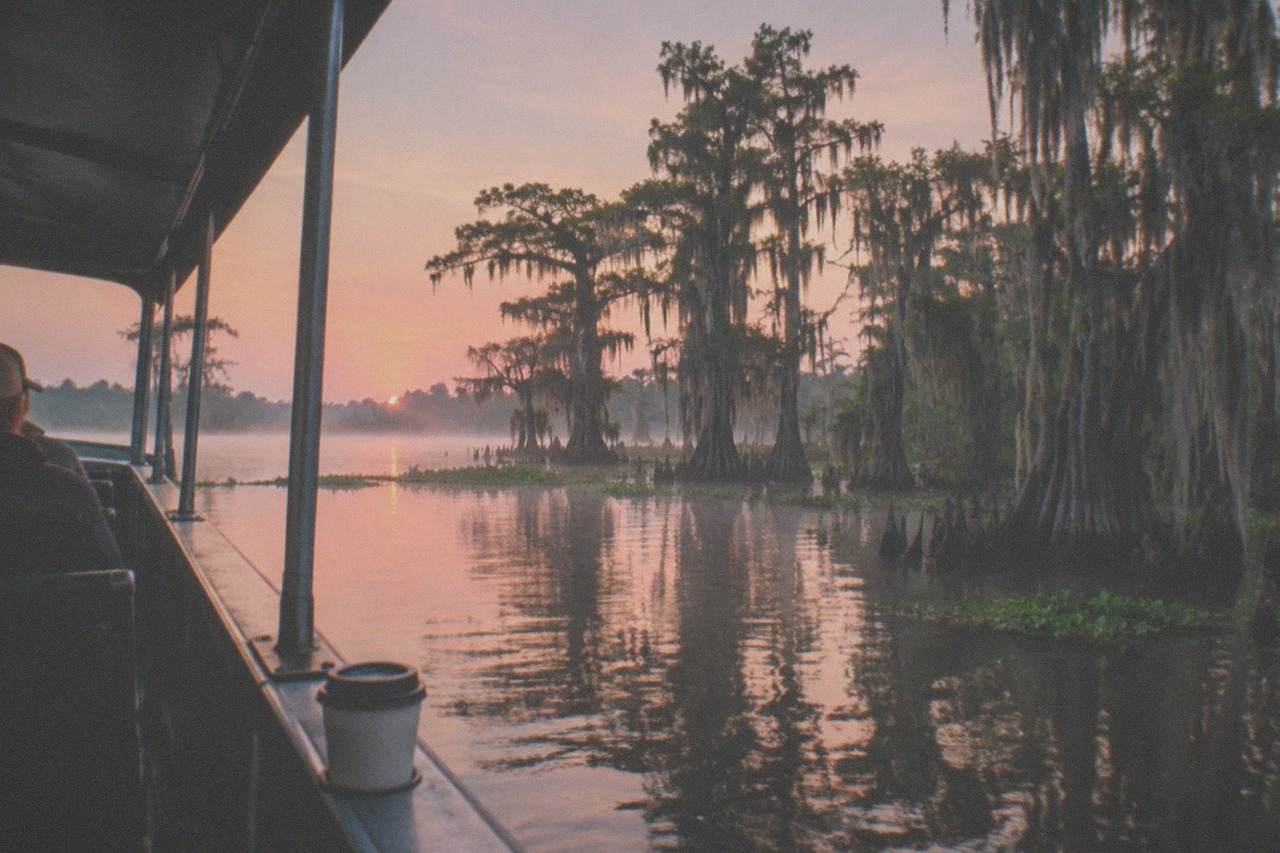
Short answer
April, late October, and early November are the strongest months: alligators are active once water and air stay warm, temperatures are manageable, and mosquito pressure is lower than in midsummer. Within any day, the first morning departure is the best bet for wildlife and cooler air. Louisiana's first recreational alligator hunting season runs October 1-31, 2026, which may add interest to an October trip.
What Is the Best Month for a Swamp Tour?
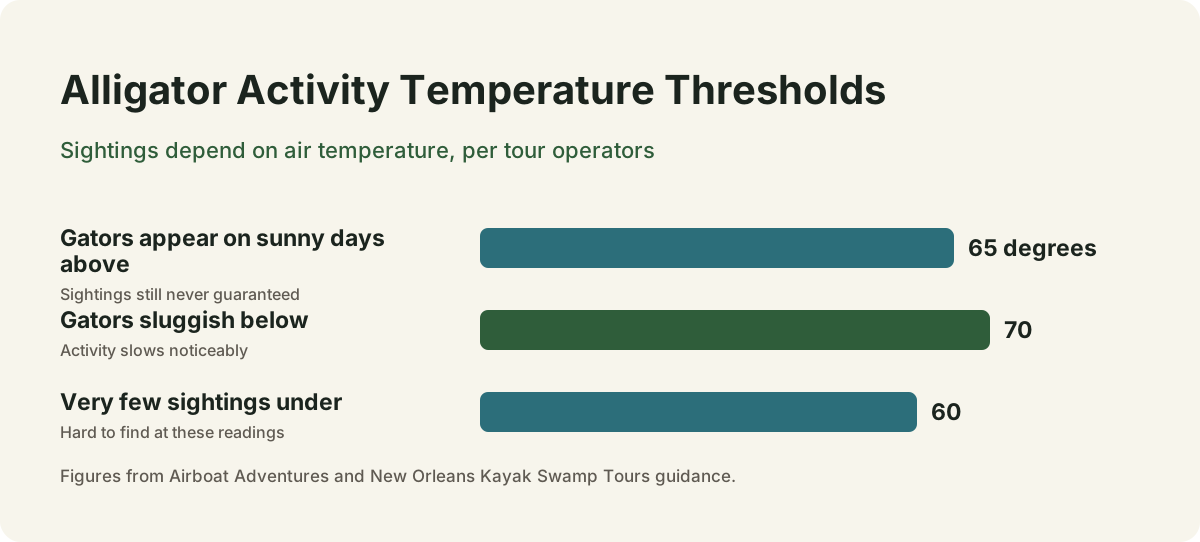
The best months are April, late October, and early November, and the reason is temperature. Alligators slow down below roughly 60 degrees Fahrenheit and become genuinely hard to find below about 70, so the shoulder seasons, warm water but bearable air, are when sightings and comfort overlap. Summer delivers the most dramatic wildlife activity but pairs it with heat, humidity, and peak crowds. Winter tours run reliably, with the tradeoff of quieter swamps.
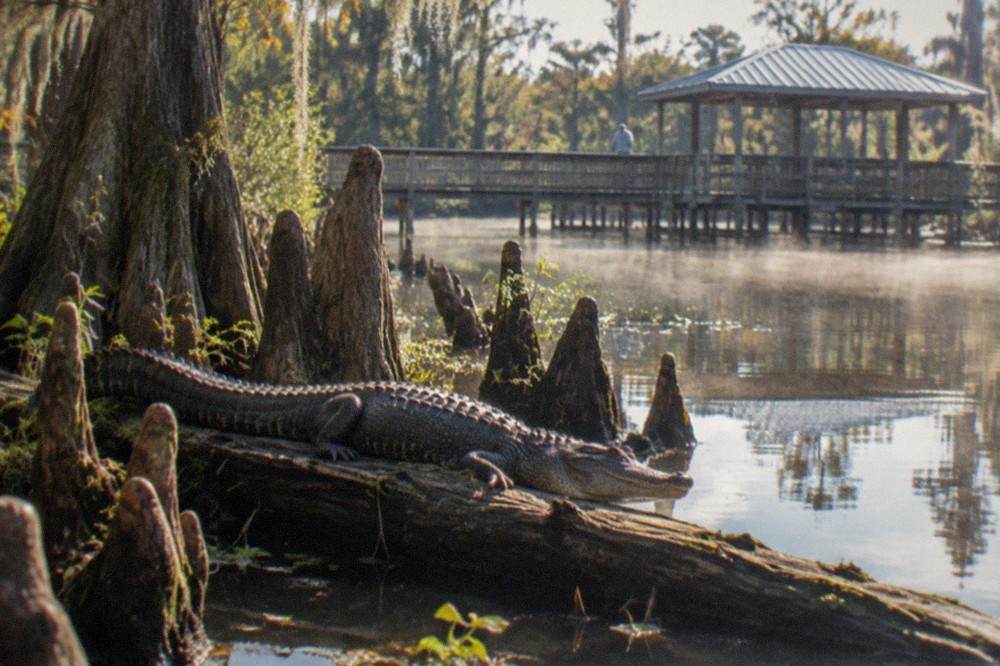
The single most useful thing to understand about Louisiana swamp wildlife is that it runs on warmth. Airboat Adventures, which runs pontoon and airboat trips out of Lafitte, tells guests plainly that alligators appear on sunny days above roughly 65 degrees Fahrenheit and that sightings are never guaranteed. New Orleans Kayak Swamp Tours, whose guides paddle Manchac year round, are more specific still: alligators get slow below about 60 degrees, are hard to find below 70, and their favorite months on the water are April, late October, and early November. Those two operator statements, taken together, are the backbone of every timing decision on this page.
That makes spring and fall the sweet spot for most visitors. In April the water has warmed, the alligators are feeding and basking, and the air has not yet reached the punishing heat of a Louisiana summer. In late October and early November the swamps are still warm enough for active wildlife, the mosquito explosion of summer has faded, and the light over the cypress turns golden earlier in the day. If you are choosing a single month for a first visit, October is arguably the strongest pick, and not only for the weather.
| Period | Alligator activity | Heat and humidity | Mosquitoes and bugs | Crowd levels |
|---|---|---|---|---|
| January to February | Low, water is cold | Mild, sometimes chilly | Minimal | Quietest of the year |
| March to April | Rising fast as water warms | Pleasant, warm days | Low to moderate | Moderate, spring festival season fills hotels |
| May to June | High and consistent | Hot, humid | Building | Busy, school vacations begin |
| July to August | Peak activity, gators everywhere | Intense heat and humidity | Heavy | Peak summer crowds |
| September | High while warmth holds | Hot, early cool fronts possible | Moderate to heavy | Moderate, a shoulder window |
| October to November | Strong through early November, then fading | Comfortable to mild | Low | Busy in October, quiet by late November |
| December | Low | Mild to cool | Minimal | Quiet, holiday travel aside |
Two calendar quirks matter if your trip lands in October 2026. Louisiana is running its first-ever recreational alligator hunting season from October 1 to October 31, 2026, with up to 5,000 lottery-selected hunters allowed to harvest two alligators each across eight zones, per the Louisiana Department of Wildlife and Fisheries. The hunt is land-based, by hook and line, and does not close tour routes, but it is a genuine piece of timing context: the state's wild alligator population now exceeds 3 million animals, a rebound from fewer than 100,000 in the 1950s, and the season exists partly because nuisance complaints have grown to 3,000 to 4,000 a year statewide. Tour boats will not be hunting. If anything, the population numbers explain why sightings have been so dependable in warm months.
The other quirk is scheduling, not wildlife. Cajun Pride, which runs covered boats into the Manchac swamp from LaPlace, operates three departures a day in winter, 9:30 AM, 12:00 PM, and 2:15 PM, from November 1 through March 31, then adds a fourth 4:15 PM departure from March 1 through October 31. The company closes only on Mardi Gras day, Thanksgiving, and Christmas. So a winter trip is entirely doable, you simply have fewer departure times to choose from, and the trade is a peaceful, uncrowded swamp against a much lower chance of alligator sightings.
If you are still weighing which tour format fits your month, the overall best swamp tours around New Orleans guide ranks the operators across every category, and the New Orleans Swamp Tours homepage compares all nineteen trips side by side.
When Are Alligators Actually Out and Visible?
Alligators bask when they need warmth and slide underwater when they have enough, so the answer is sun plus temperature. Expect active, visible gators on sunny days above roughly 65 degrees Fahrenheit, sluggish ones below 70, and very few sightings once readings fall under about 60. Cloud cover suppresses basking even in warm months, which is why a bright morning beats an overcast afternoon almost every time.
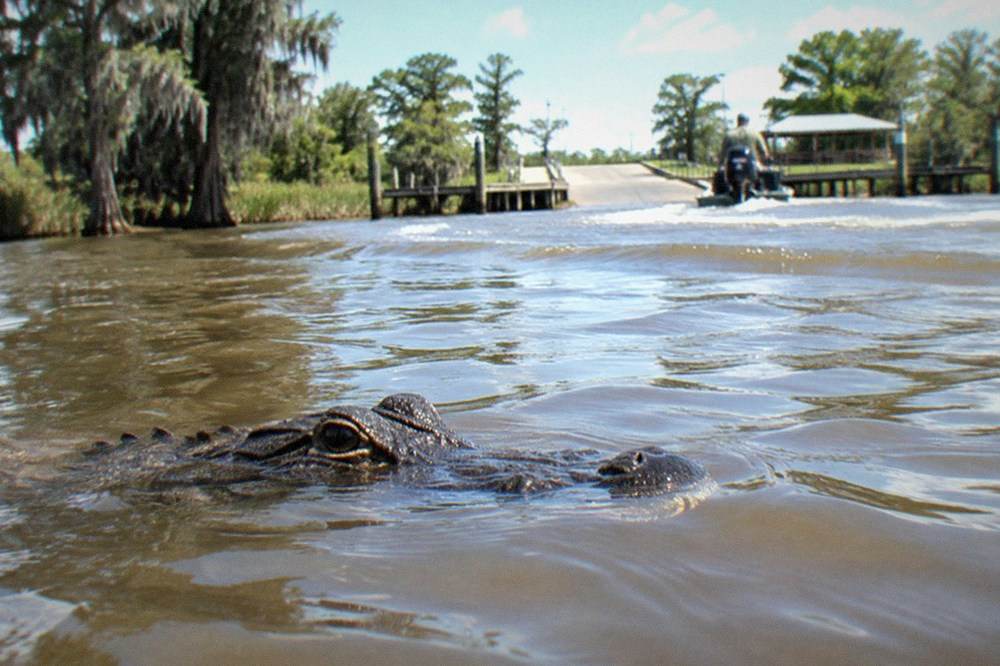
The mechanics are simple once you see them in person. Alligators are ectothermic: they do not generate their own body heat, so they haul out on banks, logs, and floating mats of vegetation to soak up the sun, and they do it most eagerly when the water is still cool. That is why a bright morning in April can produce a dozen sightings on a single boat run, while an equally warm but overcast afternoon can produce two. The animals are there either way. They are simply staying in the water where a boat cannot show them off.
Spring has one extra advantage worth planning around. In April and May the alligators are coming out of a winter of near-fasting, so they are actively feeding, and the big breeding males are moving and bellowing. Guides on the Honey Island and Barataria routes consistently call this the most theatrical stretch of the year. Fall works in reverse: the animals are fattening for winter through October and early November, then progressively disappear as the water cools.
One honest note on the October 2026 hunt, since it is the first of its kind and travelers ask about it. The season is designed for population management on private and public land across eight zones, with hunters selected by lottery and working from shore with hook and line. Tour operators in the Honey Island, Manchac, and Barataria swamps continued running daily trips through the announcement period, and no tour-area closures were attached to the hunt. If you book an October boat tour, you are going to see swamps during a genuinely historic first season, which is either atmosphere or trivia depending on your outlook.
For the same reason, the temperature logic cuts against midday in summer. When the air passes the mid-90s, alligators have all the heat they need and spend more of the day submerged, so the common assumption that hot weather equals more gators is only true up to a point. The window is warmth plus sun, not maximum heat. The difference between Louisiana alligators and crocodiles guide covers the biology in more depth if you want it.
What Is the Best Time of Day for a Swamp Tour?
The first morning departure is the best time of day for a swamp tour in every season. Air is coolest, water is calmest, basking alligators are most exposed, and the boat is least likely to be full. The last afternoon slot is the second choice, especially in summer, when animals come back out as heat eases. Midday is the weakest slot: harsh light, peak heat, and fewer visible animals.
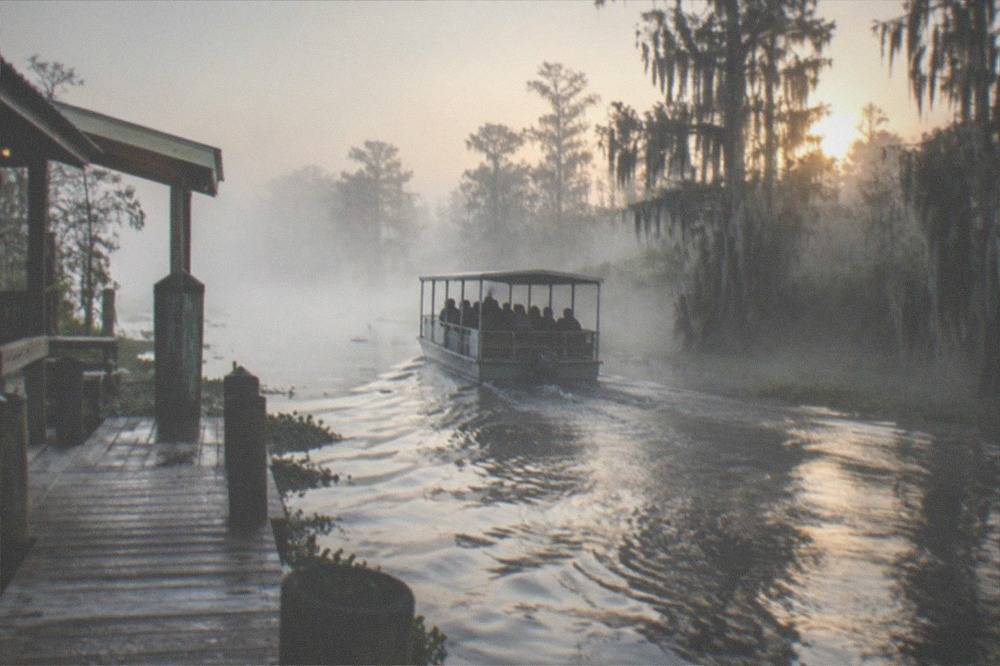
Every operator on the roster schedules around this pattern, and their published departure times show it. Dr. Wagner's runs Honey Island boats at 9:30 AM, 12:15 PM, 2:45 PM, and 5:00 PM daily year round. Airboat Adventures flies from Lafitte at 9:45 AM, 12:00 PM, and 2:00 PM, with seasonal 4:00 PM and 6:00 PM spring and summer additions. Jean Lafitte Swamp & Airboat Tours runs Barataria boats at 10:00 AM, 12:00 PM, 2:00 PM, and a seasonal 4:00 PM that does not run in winter. The first slot of the day is, on every one of those schedules, the one that sells out first.
| Time of day | Wildlife odds | Comfort | Crowds and light | Best for |
|---|---|---|---|---|
| First morning departure | Highest, cold-night gators basking hard | Coolest air of the day | Fewest guests, soft light for photos | Wildlife watchers and photographers |
| Late morning | Good, activity continues if sun holds | Warming | Filling up | Families with small kids, easier start |
| Midday | Moderate, animals may slide underwater | Hottest hours, especially June to August | Full boats, harsh overhead light | Only if morning is sold out |
| Late afternoon and golden hour | Rising again as heat eases | Comfortable in spring and fall | Moderate, best light of the day | Photographers, summer travelers |
| Seasonal evening slot | Unpredictable, feeding window | Coolest, sometimes buggy | Small groups | Adventurous travelers, birders |
The seasonal evening departures deserve a special mention. Cajun Pride's 4:15 PM tour only exists from March 1 through October 31, and Airboat Adventures' 6:00 PM run is likewise a spring and summer offering. Those late slots put you on the water as the heat breaks, when herons and egrets move to roost and the light turns the cypress gold. Dr. Wagner's 5:00 PM Honey Island departure runs year round, and the company also offers small-group evening and birding trips by arrangement, which is a genuinely underused option for anyone traveling with camera gear.
The Barataria route has its own timing wrinkle. Adventures of Jean Lafitte, which runs covered swamp boats from Marrero into the swamps adjacent to the Barataria Preserve, lists its tours at 10:00 AM, 12:00 PM, 2:00 PM, and seasonal 4:00 PM. The 10:00 AM departure there is the strongest wildlife bet for the same reasons as everywhere else, and the company's boats carry restrooms and Coast Guard certification, which makes the midday slots more bearable for families with small children than they would be on a small open boat.
If morning is out of the question because of a late flight or a slow start, the practical advice is to take the last slot rather than the middle one, and to lean toward a covered boat in summer. The airboat versus covered boat comparison breaks down how much the boat type changes the experience at each time of day.
What Happens if Weather Cancels Your Tour?
Most swamp tours run rain or shine, and only lightning reliably stops them. Cajun Pride states that only lightning cancels its boats, and Cajun Encounters runs tours in rain with no refund if weather cuts a tour short after an hour or more on the water. Cancellation windows vary by operator from 24 to 48 hours, so the policy matters more than the forecast when you book.
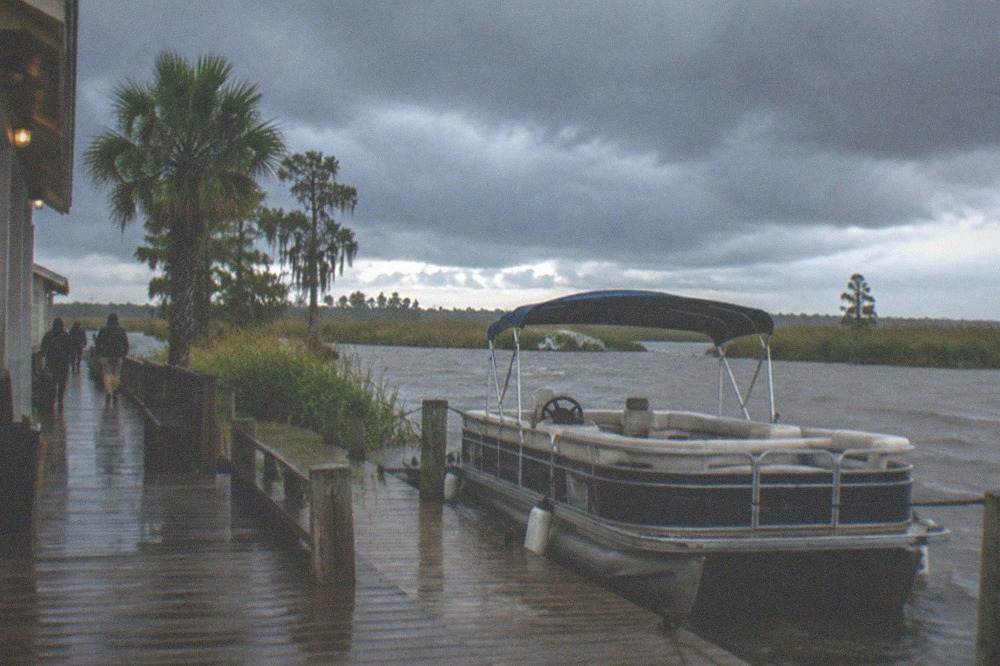
The honest version of weather logistics is this: a Louisiana forecast showing scattered thunderstorms is a normal forecast, and operators have worked around it for decades. Covered pontoon boats, which make up most of the fleet on the Manchac and Barataria routes, run through steady rain without much drama. What actually stops a tour is lightning in the area, and when it does, the operator reschedules or refunds according to its own policy, which is where the differences between companies get real.
| Operator or tour | Weather policy | Cancellation window for guests |
|---|---|---|
| Cajun Encounters, Honey Island boat tours | Tours go out rain or shine, no refund if an hour or more of the tour completes before weather forces a return | 36 hours for a full refund, bookings inside 36 hours are final, one courtesy reschedule for day-of misses |
| Cajun Pride, Manchac covered cruises | Only lightning cancels, covered boats run in rain | Terms set in the booking flow |
| Jean Lafitte Swamp & Airboat Tours, Barataria | Boats run in rain, Coast Guard certified fleet | 24 hours, no refunds inside the window, tickets transferable and valid up to one year |
| Airboat Adventures, Lafitte | Airboats do not run in lightning, hearing protection provided | Inside 24 hours final, optional Trip Protection at 10 percent allows changes up to 1 hour before departure |
| New Orleans Kayak Swamp Tours, Manchac | Water-level dependent, Honey Island kayak trips are seasonal | 100 percent refund more than 48 hours out, 50 percent inside 48 hours if rescheduling fails |
Two of those policies deserve a plain-language translation. The Jean Lafitte transferability clause is quietly one of the best in the niche: if your 10:00 AM Barataria boat is cut short by a lightning cell, the ticket stays valid for up to a year, which matters a lot if your trip is short and you cannot simply rebook for tomorrow. Airboat Adventures' Trip Protection, priced at 10 percent of the booking, lets you cancel or reschedule up to one hour before departure with a written request, which is worth considering for an airboat trip since small-craft weather calls are made close to departure time.
The kayak side is different, and it is worth understanding why before booking a paddle. Kayak trips in the Honey Island swamp run through flooded bald cypress and tupelo out toward a Pearl River sandbar, and the operator states plainly that they are seasonal and dependent on water level. In spring 2026 that dependency was visible in the news: the Pearl River Wildlife Management Area, adjacent to the swamp, closed its access roads due to flooding on May 29 through 31, and again around June 20, when the gauge at Pearl River town crested at 17.41 feet. Old Highway 11, a main access route to that area, closes when the gauge reads 16.5 feet, a threshold tracked publicly by the USGS water data service. By late September 2026 the river had settled back to roughly 3 feet on the Slidell gauge, and tours were running normally.
If a storm does interrupt your tour, the sequence is predictable: the captain turns back, the operator offers a reschedule first and a refund second, and the policy table above determines which you get. Book with the cancellation window in mind rather than the forecast, and check whether your chosen slot is the operator's last of the day, since a late-afternoon lightning delay is harder to recover from than a morning one.
Do Tour Schedules Change With the Seasons?
Yes, and mostly at the edges of the day. Winter means fewer departures, typically three per day instead of four, and no late-afternoon slots, while spring through fall adds a 4:15 or 4:00 PM tour and, for some operators, an early evening run. Honey Island boats run the same four times daily year round. The core schedule, morning through mid-afternoon, never disappears.
The seasonal pattern is consistent across operators even though the details differ. Cajun Pride runs 9:30 AM, 12:00 PM, and 2:15 PM daily from November 1 through March 31, then adds the 4:15 PM departure from March 1 through October 31, with the two shoulder weeks in early March overlapping both rules. Jean Lafitte Swamp & Airboat Tours drops its 4:00 PM departure in winter. Airboat Adventures adds both a 4:00 PM and a 6:00 PM run in spring and summer. Dr. Wagner's is the outlier, holding the same 9:30 AM, 12:15 PM, 2:45 PM, and 5:00 PM Honey Island schedule all year, closed only for major holidays.
What that means for planning is simple. In summer you have more slots and more flexibility, but the best ones, the first morning and the golden-hour evening, sell out fastest because everyone wants to escape the midday heat. In winter you have fewer slots, but the boats are quieter and the 9:30 AM departure is nearly always available even a day or two ahead. A winter morning tour is one of the most underrated bookings in the region: you will see fewer alligators, but you will also share the swamp with a fraction of the people.
The covered-boat operators also make winter touring more comfortable than visitors expect. Cajun Pride's boats are covered, which the company points to as the reason its tours run in any weather short of lightning, and its dock at 110 Frenier Road in LaPlace sits about 27 miles from the French Quarter, roughly 15 minutes from the airport, so a winter morning departure does not require a punishingly early start. Dr. Wagner's covered and uncovered Honey Island boats depart from the same Slidell dock as Cajun Encounters, at 55345 US-90, where free parking and a proper check-in facility make the self-drive option easy in any season.
One timing trap to avoid: the seasonal 4:15 PM slot is the one most likely to be cut by early darkness in late October and November, so if you are traveling in the shoulder season and want the late tour, book the first week of the window rather than the last. And if you are still deciding what to actually wear out there, in any month, the what to wear on a swamp tour guide covers sun, bugs, and splash protection by season.
The Adventures of Jean Lafitte covered boat out of Marrero is a good example of a tour that rewards off-peak booking: at $30 it is the lowest-priced boat tour in the region, it holds a 4.5 rating from 1,615 reviews, and its Barataria route is at its quietest in the winter months when the 4:00 PM slot is gone.
For a covered-boat alternative with a pickup option, the Cajun Pride Manchac cruise at $35, rated 4.7 from 1,759 reviews, runs the same three-daily winter schedule and adds the fourth departure in the warm months, which makes it a natural pick for travelers who want the schedule flexibility of a bigger operator.
How Far Ahead Should You Book?
Book two to four weeks ahead for a spring or summer morning slot, and a few days ahead for most winter departures. The first boat of the day sells first on every operator's schedule, and October is the busiest month on the calendar thanks to the combination of comfortable weather, active alligators, and the new hunting season drawing attention to the swamps. Same-day bookings usually work in winter, rarely in July.
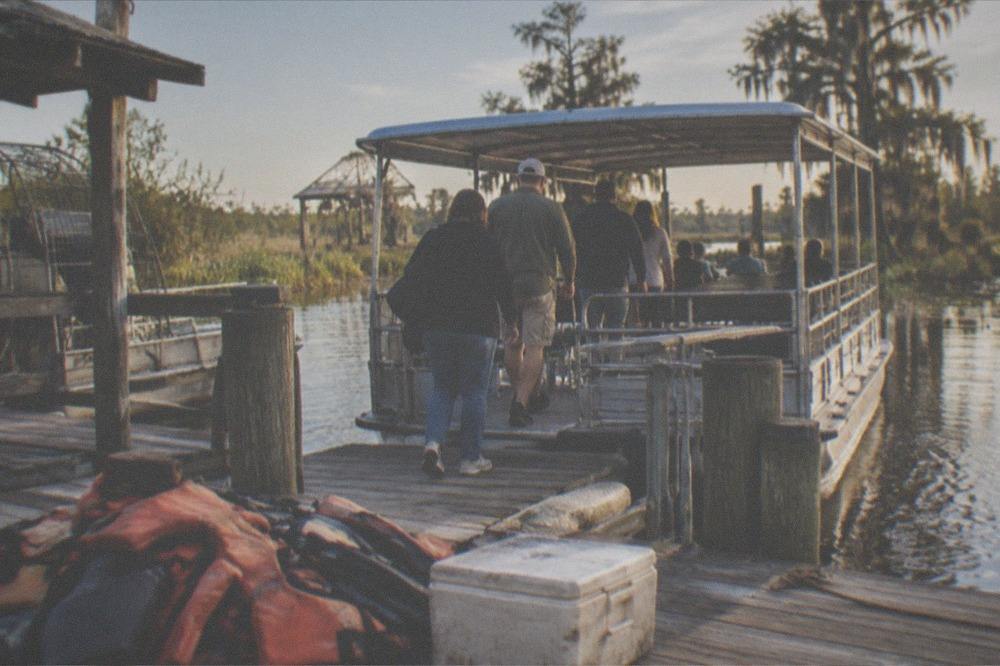
Demand in this niche tracks New Orleans visitation, and visitation is at near-record levels. The city recorded 19.46 million visitors in 2025, up 2 percent from 2024 and just 1 percent below the 2019 record, with visitor spending of $10.8 billion. On the swamp side, the Honey Island operators reported busy days drawing over 1,000 visitors to the swamp during the 2026 season. None of that means you cannot find a seat, but it does mean the popular slots, first morning boats out of Slidell and LaPlace, and the small premium airboats, fill first.
The boat-type choice changes the booking math too. Small-group options have hard ceilings by design: the premium small airboats at Airboat Adventures carry up to 6 passengers, the regular small boats up to 10, and the large airboats up to 30. A 6-seat premium airboat on a Saturday morning in April is a scarce product no matter when you book it. Covered pontoon boats, by contrast, run at 16 to 30 passengers or more, and the largest covered fleet in the region, Louisiana Tour Company's Barataria operation, moves enough people that a midday seat is usually available even in peak season.
Cancellation windows, covered in full above, are the last piece of the booking decision. If your itinerary is loose, a 24-hour operator gives you flexibility. If your trip is fixed around a festival weekend, book early and treat the departure time as locked. And if you want the airboat experience specifically, note that pregnant women, children under 5, and anyone with neck or back injuries cannot fly on Airboat Adventures' boats, a restriction that pushes families toward covered boats or the pontoon option, which is wheelchair and stroller friendly.
For the airboat side of the ledger, the Lafitte airboat ride at $50, rated 4.7 from 5,215 reviews, is the most-booked airboat product in the region and runs daily from 5145 Fleming Park Road in Lafitte, with a $30 per person round-trip transport add-on from Greater New Orleans hotels.
The short version of all of this: pick April or October if you can, take the first morning boat, book two or three weeks out if it is spring or summer, and read the cancellation policy before the forecast. Everything else, from the boat type to the route, is preference. The timing is the part that decides what you see.
Common Questions About the Best Time for a Swamp Tour
What is the best time for a swamp tour?
April, late October, and early November, on the first morning departure. Those months combine active alligators with comfortable temperatures and lower bug pressure, and the morning slot catches animals basking in the coolest air of the day.
What month has the most alligators?
July and August have the most alligator activity in absolute terms, since the swamps are at peak warmth, but very hot middays push animals underwater. April and October deliver more visible sightings per trip because the animals bask longer in bearable heat.
Are swamp tours worth it in winter?
Yes, with adjusted expectations. Boats run daily through winter on three-departure schedules, crowds are minimal, and Cajun Pride closes only on Mardi Gras, Thanksgiving, and Christmas. Alligator sightings drop sharply below about 60 degrees Fahrenheit, but birdlife and the landscape itself hold up well.
Do swamp tours get cancelled for rain?
Rarely. Covered boats run rain or shine, and Cajun Pride cancels only for lightning. Cajun Encounters gives no refund if an hour or more of the tour completes before weather forces a return, so a shortened tour usually means a reschedule offer rather than a refund.
Is morning or afternoon better for seeing alligators?
Morning, in every season. Alligators bask most aggressively after a cool night, the water is calmest, and boats carry fewer guests. Late afternoon is the second-best window as heat eases, and the seasonal 4:15 PM and evening departures exist precisely for that reason.
How far in advance should I book a swamp tour?
Two to four weeks for a spring or summer morning slot, and a few days ahead for most winter departures. Small premium airboats with 6 to 10 seats sell out earliest, while large covered pontoon boats usually have midday seats even in peak season.