Alligators vs Crocodiles in Louisiana: What Actually Lives in the Swamps
The honest answer to the alligator-versus-crocodile question surprises people: only one of these animals lives in Louisiana, and it is the one with the broad, dark snout.
Short answer
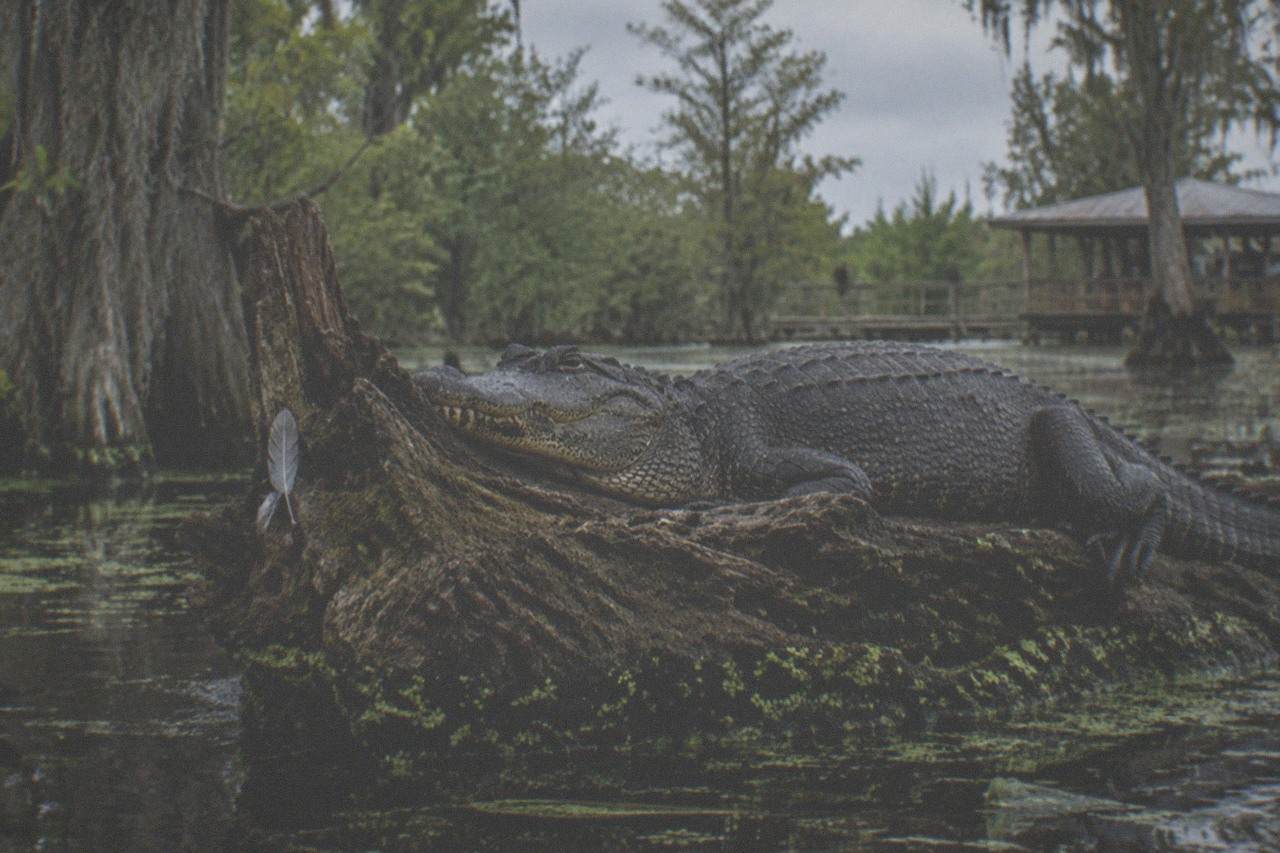
Louisiana's swamps are home to American alligators, more than 3 million of them statewide, and to no wild crocodile population. Wild American crocodiles live in South Florida. Every gator you spot on a swamp tour here is an alligator: broad snout, dark hide, freshwater habitat, and a shy disposition around boats.
Are there crocodiles in Louisiana?
No. Louisiana has no wild crocodile population. The American crocodile lives in South Florida, centered on saltwater mangroves and brackish lagoons around the Everglades and the Keys, more than 800 miles from the Louisiana line. Every large reptile you will see on a swamp tour here is an American alligator, a different species with a different snout, a different temperament, and a strong preference for freshwater swamp.
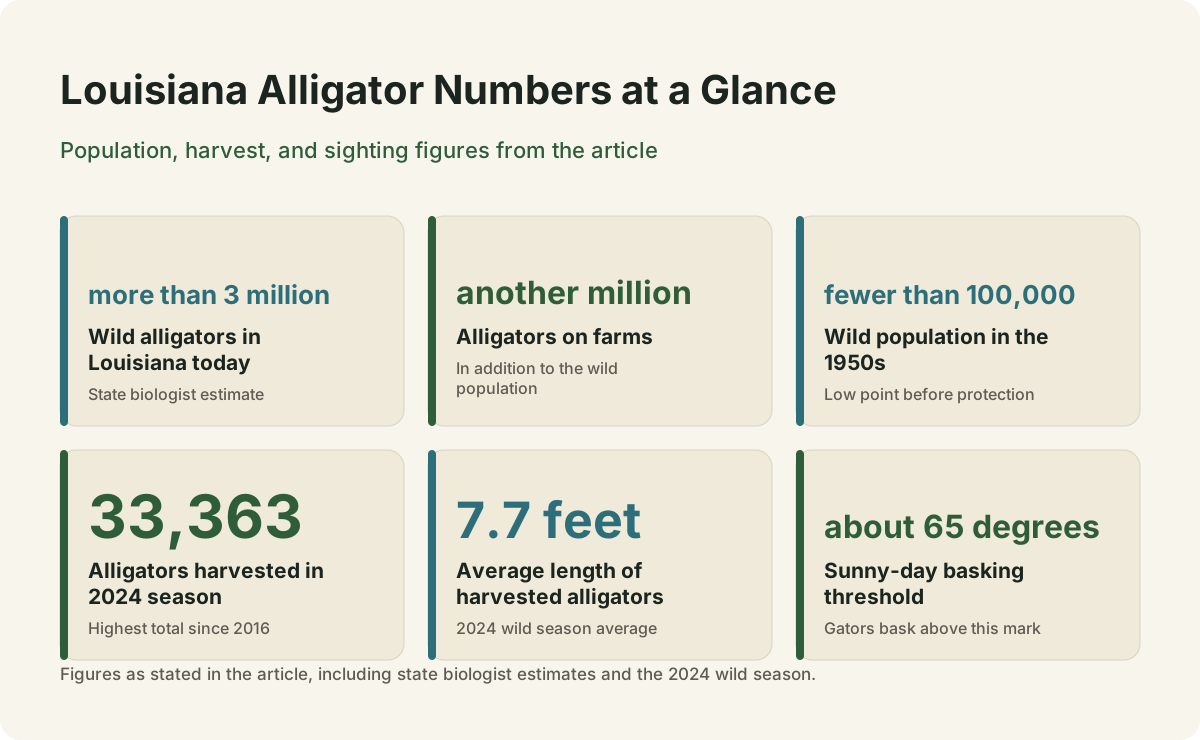
The distinction matters more than most visitors expect. Louisiana's alligator population is one of the great wildlife recovery stories in North America. State biologists put the wild population at more than 3 million animals today, with roughly another million on farms, a rebound from fewer than 100,000 in the 1950s that prompted decades of protection and managed harvest. The recovery worked so well that Louisiana launched its first-ever recreational alligator hunting season in 2026, running October 1 through 31, with up to 5,000 lottery-selected hunters across eight zones.
The American crocodile, by contrast, is a federal-listed species clinging to the southern tip of the Florida peninsula. It tolerates salt water in a way alligators do not, which is the single biggest reason the two ranges never met in Louisiana: the coastal marshes here are brackish in places, but the crocodile's breeding range simply never stretched west of the Sunshine State in recorded history.
So if a tour captain in Barataria or Honey Island points out a long-snouted reptile sliding off a bank and calls it an alligator, that captain is correct. If someone back home insists they saw a "crocodile in New Orleans," they saw an alligator, and the mix-up is purely vocabulary. For a fuller picture of the waterways these animals live in, see our guide to the bayous near New Orleans.
What is the actual difference between an alligator and a crocodile?
The fastest field marks are the snout and the teeth. An alligator has a broad, U-shaped snout with only its upper teeth visible when the mouth is closed, while a crocodile has a narrower, V-shaped snout with interlocking teeth showing top and bottom. Add color and habitat: alligators run darker gray to black and live in freshwater swamp, while crocodiles run olive-tan and live in brackish coastal water.
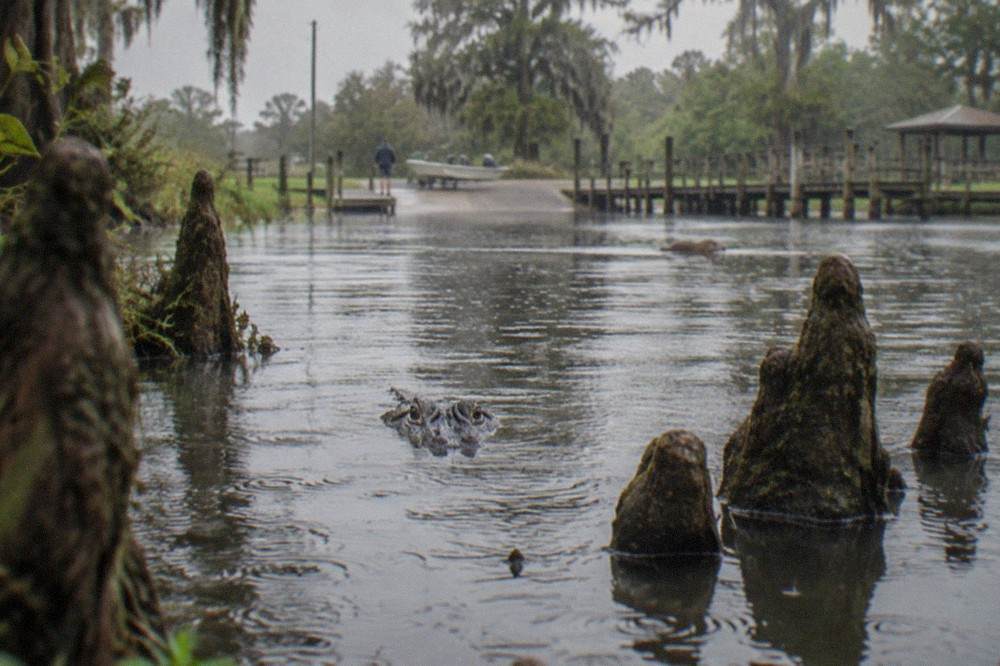
Those field marks come with a size gap, though a wild Louisiana alligator is not a small animal by any measure. Adult males commonly reach lengths that make first-time viewers gasp, and the animals basking along tour routes are often the largest in the local population because they hold the best sunning spots. Diet is another separator worth knowing before a trip: alligators are opportunistic and eat fish, turtles, nutria, birds, and snakes, while crocodiles in Florida feed more heavily on fish and coastal prey. Neither species hunts people, and both avoid humans when given the chance.
The temperament difference is the one tour captains care about. Alligators are famously wary of boats and people, which is why tours can glide within a few yards of a twelve-foot animal without incident. Crocodiles are generally regarded as the more aggressive of the two, another reason nobody in Louisiana tourism misses them. In Louisiana, the snout test settles every case, because there is no crocodile here to confuse it with. The table below puts the two species side by side.
| Feature | American alligator | American crocodile |
|---|---|---|
| Where it lives in the U.S. | Across the Gulf Coast, including all of Louisiana's swamps | South Florida only |
| Snout shape | Broad, U-shaped | Narrow, V-shaped |
| Teeth when mouth closed | Upper teeth only | Upper and lower, with a visible fourth lower tooth |
| Typical color | Dark gray to black | Olive to tan |
| Water it prefers | Freshwater swamp, marsh, bayou | Brackish and saltwater coastal lagoon, mangrove |
| Temperament around people | Wary, avoids contact | More territorial |
| Federal status | Recovered, state-managed, hunted by permit | Listed, protected |
One number worth carrying in your head for the ride home: in the 2024 wild alligator season, licensed hunters in Louisiana harvested 33,363 alligators, the highest total since 2016, with an average length of 7.7 feet. That is a working landscape, not a zoo, and the size of the animals on tour routes reflects it.
A little biology explains why the two species split the map the way they do. Alligators have a salt gland on their tongue but it does not function, so they cannot tolerate saltwater for long and stay tied to freshwater marsh and swamp. Crocodiles have working salt glands and can thrive in brackish coastal water, which is why the American crocodile holds the mangrove and lagoon habitat of South Florida. The American crocodile is also a genuine rarity in the United States, with a population of roughly 2,000 animals, compared with an American alligator population of about 5 million across the Southeast. The alligator's comeback from fewer than 100,000 animals in the 1950s to more than 3 million in the wild today is one of the great recovery stories in American wildlife management.
The temperature of the nest decides the sex of the hatchlings in both species, which is a detail tour captains love to share. Eggs incubated at or below roughly 88 degrees Fahrenheit produce females, while eggs above roughly 91 degrees produce males, and temperatures in between can yield either. That makes the female the parent who guards the nest, and it is why a mother alligator defending a nest site is the one situation where the species' famous wariness drops away. Give any alligator on a nest a wide berth.
If reading the differences has you ready to see the animal itself, these three tours cover the main ways to do it.
Which swamp tour format gets you closest to alligators?
A covered pontoon boat with a narrated guide is the most reliable alligator format, because the boats travel slowly through narrow bayous where gators bask on banks, and the noise level stays low enough that animals stay put. Airboats reach deeper, more remote marsh, but the engine noise scatters wildlife at close range. Kayaks offer the quietest approach of all, with a slower, more physical trip.
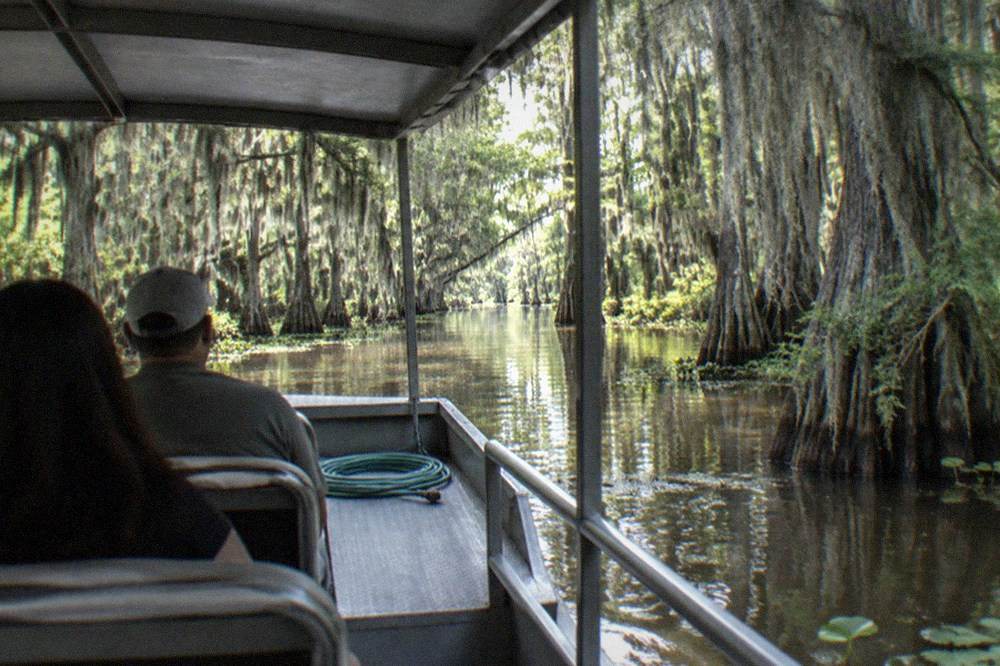
The classic choice is a large covered boat like the Louisiana Tour Company's swamp tour out of Barataria, which runs 1 hour 40 minutes on the water and carries a 4.9 rating from 2,275 reviews, the largest covered-boat fleet in the area. Covered boats matter for gator watching specifically: the roof shades the water ahead, the sides keep you at eye level with the banks, and the pace is slow enough for a captain to stop and hold position while an animal floats alongside. There is no hotel pickup on that one, so you drive to the dock, which keeps the price at $35.
The same Barataria waterway hosts Adventures of Jean Lafitte's bayou wildlife tour, a $30 trip with a 4.5 rating from 1,615 reviews and an optional pickup, which makes it the budget entry point for alligator country. For the Northshore alternative, Cajun Encounters' Honey Island boat tour with transport from the French Quarter costs $75.52 and carries a 4.9 from 7,119 reviews, the highest-reviewed swamp tour in the niche, running roughly two hours on the water plus round-trip transport. Honey Island is one of the least-altered river swamps in the United States, with no pipelines or oil platforms, and its protected half shelters black bears and bald eagles alongside the gators.
The format comparison below is the honest version, based on what each boat type actually does to the animals you came to see.
| Tour format | Alligator viewing | Trade-offs | Typical price |
|---|---|---|---|
| Covered pontoon boat | Slow passes along banks, close holds, good for photography | Fixed route, larger group | $30 to $75.52 with transport |
| Airboat | Fast access to remote marsh, sightings often at distance | Engine noise scatters close wildlife | $50 to $115 |
| Kayak | Quietest approach, gators less disturbed | Slower pace, smaller radius, physical effort | $49 to $84 |
If you are weighing the engine question more deeply, our airboat versus boat comparison breaks down the full experience, and the best time for a swamp tour covers the seasonal side of the same decision.
When are alligators most active on a swamp tour?
Alligators are ectothermic, so their activity tracks temperature directly, and the number that matters is about 65 degrees Fahrenheit. On sunny days above that mark, gators climb out onto banks and logs to bask, which is exactly what you want to see. Guides note they become genuinely hard to find below 70 degrees, so warm afternoons from spring through early fall deliver the most sightings.
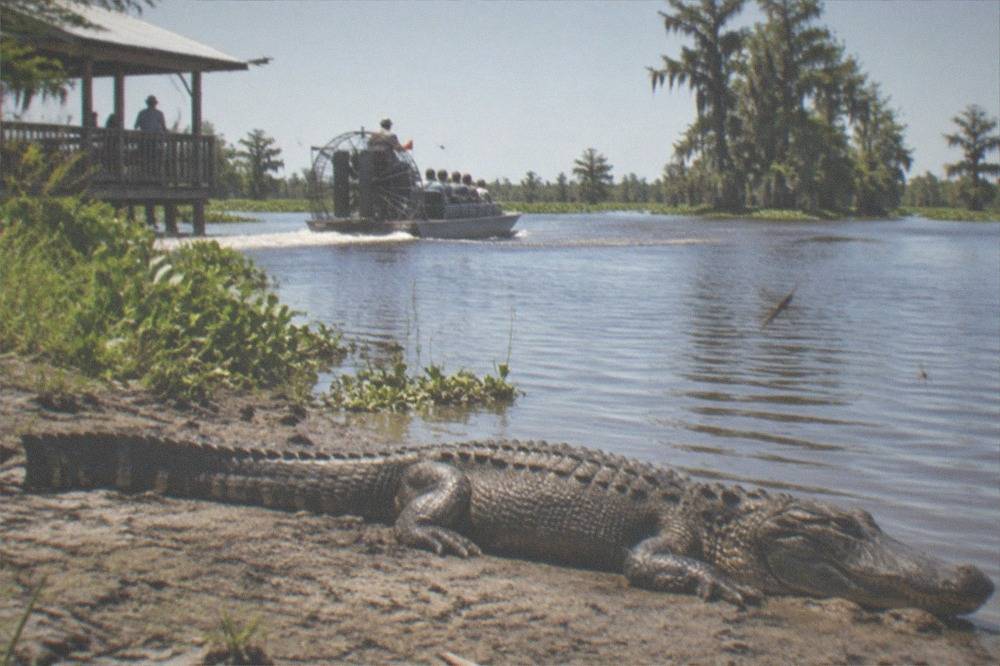
Operators state this plainly on their own FAQ pages. Airboat Adventures, running out of Lafitte, tells guests that alligators appear on sunny days above roughly 65 degrees and that sightings are never guaranteed. New Orleans Kayak Swamp Tours, whose guides paddle Manchac year-round, note that alligators slow below about 60 degrees and are visible most of the year otherwise, and their favorite months for wildlife are April, late October, and early November, when the heat eases but the water is still warm.
That shoulder-season window is the insider pick. In the peak of summer, afternoon tours can find gators submerged in cooler water rather than basking, while an early-fall trip gets the best of both: warm water, comfortable air, and animals that have spent months feeding. A morning departure in late October often outperforms a July afternoon for actual sightings, even though the July trip feels more "swampy."
The seasonal pattern is worth planning around, and the numbers below summarize it.
| Season | Alligator behavior | What to expect on tour |
|---|---|---|
| Spring (March to May) | Warming water, active feeding | Reliable sightings, active animals |
| Summer (June to August) | Basking early, submerging in afternoon heat | Best on morning departures |
| Fall (September to November) | Warm water, cooling air, heavy feeding | Excellent sightings, comfortable ride |
| Winter (December to February) | Slowed metabolism, minimal basking | Tours run, sightings fewer and brief |
One more seasonal note for the fall traveler: the state's new recreational alligator hunting season runs the whole of October, and Maurepas Swamp WMA is included in the commercial harvest lottery. Tour routes are unaffected, but it is one more sign of how abundant the animal has become.
How close do alligators get to the boat, and is it safe?
On a standard narrated boat tour, alligators routinely approach within a few feet of the hull, sometimes drifting alongside, because animals in tour corridors have spent generations around boats. The safety record reflects that: licensed captains, Coast Guard-inspected vessels, and a strict rule that guests stay seated with hands inside. The official guidance is unambiguous, never feed a wild alligator, because a fed gator becomes a nuisance animal.
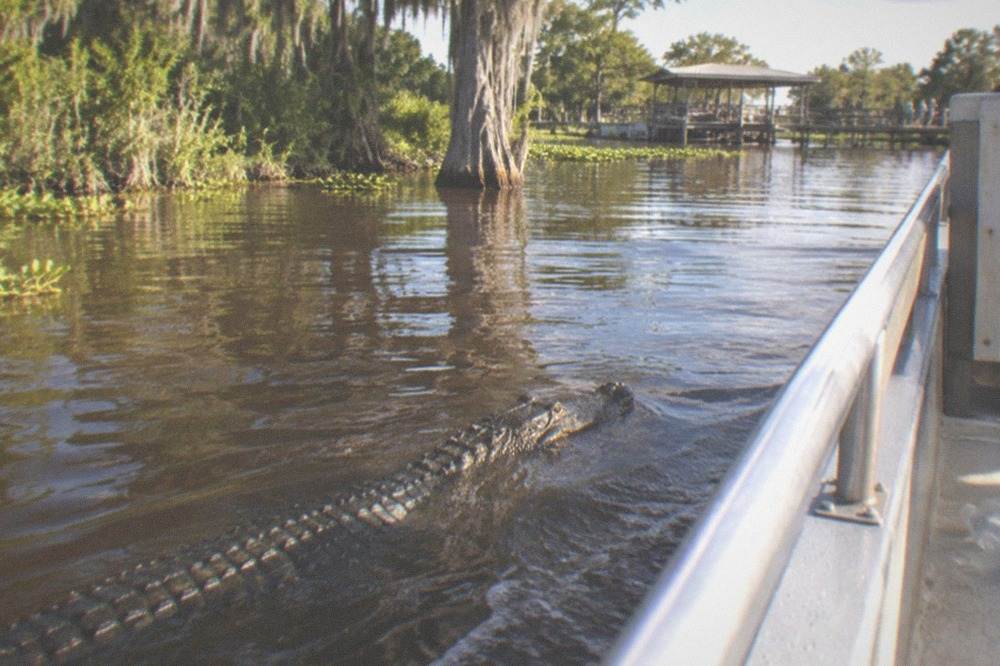
Feeding is the one behavior that turns a healthy wild population into a problem. Louisiana's wildlife department fields 3,000 to 4,000 nuisance alligator complaints every year and removes or relocates 1,500 to 2,000 animals annually, and the vast majority of those nuisance animals began as gators someone fed at a dock or a roadside. Tour operators enforce the rule hard: no feeding, no reaching toward the water, no dangling items over the side. A gator that learns to approach boats for food loses its wariness, and that wariness is precisely what makes wild viewing safe.
The rest of the safety picture is simpler than people fear. Alligators do not pursue people, and the dramatic attacks that make national news, like the June 2026 case of a man fleeing police through a St. Charles Parish swamp, involve people entering the animals' space at night, not tourists on a platform boat at noon. Staying in the boat, keeping children with adults, and following the captain's instructions covers essentially the entire risk. The rules below are the ones that matter.
| Rule | Why it exists |
|---|---|
| Never feed or lure an alligator | Fed gators lose their fear of people and become nuisance removals |
| Stay seated, keep hands and arms inside the boat | Prevents any contact with water where animals approach |
| Keep children with an adult at all times | Standard operator policy on every licensed tour |
| Do not swim or wade in swamp water | Alligators hunt at the waterline, especially at dusk |
| Watch from a distance on land, never approach a nest | Mothers guard nests aggressively in June and July |
On Honey Island tours, the viewing is quieter still. The swamp there holds alligators, black bears, wild hogs, herons, egrets, ibis, osprey, deer, nutria, otter, beaver, mink, and the ringed map turtle, a species found nowhere else on earth. Busy days on that water see over 1,000 visitors, and the animals carry on regardless, which tells you how settled the arrangement is. Our Honey Island swamp tour guide covers that route in full.
What will you actually see on a Barataria or Manchac tour?
Expect two to six alligator sightings on a warm-weather boat tour, with the animals basking motionless on a bank or floating with just their eyes and nostrils above the surface, plus herons, egrets, nutria, and turtles. Barataria tours run close to a national preserve whose boardwalks are partly closed for construction. Manchac is darker, more flooded cypress, with the same animals seen at closer quarters.
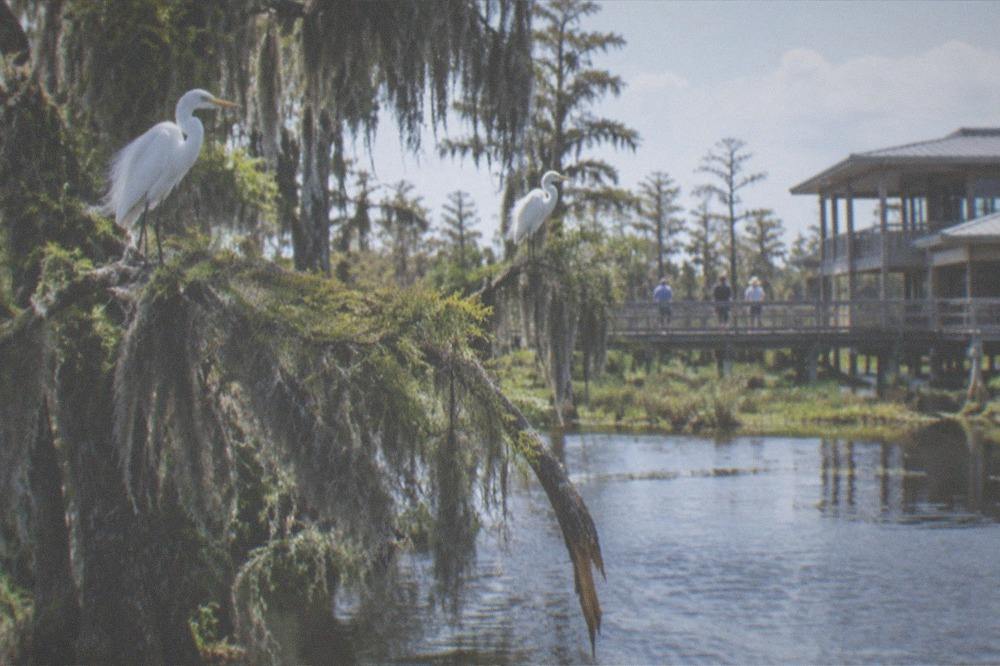
The Barataria situation deserves a fresh explanation, because it changed in 2026. The Barataria Preserve unit of Jean Lafitte National Historical Park and Preserve closed its visitor center and most trails on February 2, 2026, for a Hurricane Ida recovery construction project expected to run about two years, rebuilding roughly 1.32 miles of boardwalk and removing about 2.07 miles of frequently flooded trail. The Twin Canals Trail and canoe launch stay open, and park services have relocated to the Louisiana Wetlands Educational Center in Jean Lafitte, which opened in March 2026 and is open Tuesday through Sunday, with $10 adult admission covering both the center and the adjacent Barataria Museum. None of this touches the commercial swamp tours, which launch from private docks outside the closure area, but independent visitors who planned to walk the preserve's famous boardwalk should know the current state before driving out. The National Park Service alerts page tracks which sections reopen as phases complete.
Manchac, west of the city, is a different ecosystem in recovery. A $300 million state project is reconnecting the Mississippi River to the Maurepas Swamp through Hope Canal, delivering up to 2,000 cubic feet per second of fresh water to roughly 45,000 acres of swamp, with construction ongoing and completion expected in 2030. The Coastal Protection and Restoration Authority runs the project, and biologists expect healthier cypress and better fish and wildlife habitat as the freshwater flow returns. For tour purposes, Manchac already delivers: Cajun Pride's covered cruises out of LaPlace run 4.7 from 1,759 reviews at $35, and the kayak operation there paddles small groups of 8 to 12 through water the big boats cannot reach.
Barataria's budget option remains the best value in alligator country. The Adventures of Jean Lafitte bayou wildlife tour runs $30, holds a 4.5 from 1,615 reviews, and offers an optional pickup, and its route through the Barataria waterway passes the same banks the bigger boats work.
Whichever route you choose, the animal at the center of it is the same one: the American alligator, the swamp's original landlord, back at full strength after a century of hard knocks. For a side-by-side of every operator, price, and departure point, the New Orleans Swamp Tours homepage compares all nineteen tours in one table.
Common Questions About Alligators vs Crocodiles
Are there crocodiles in Louisiana?
No. Louisiana has no wild crocodile population. The American crocodile lives in South Florida, in brackish coastal water around the Everglades and the Keys. Every large reptile on a Louisiana swamp tour is an American alligator.
How can I tell an alligator from a crocodile?
Look at the snout and the teeth. Alligators have a broad, U-shaped snout with only upper teeth visible when the jaw is closed; crocodiles have a narrower, V-shaped snout with a large fourth tooth visible on the lower jaw. Alligators are darker, near black, and prefer freshwater.
How many alligators live in Louisiana?
The wild population exceeds 3 million animals, with roughly another million on farms, a recovery from fewer than 100,000 in the 1950s. The 2024 wild harvest alone was 33,363 alligators, the highest since 2016.
When is the best time of year to see alligators?
Sunny days above about 65 degrees Fahrenheit, when gators bask on banks and logs. Guides report the best months as April, late October, and early November, when water is still warm but the air is comfortable. Below about 60 degrees, alligators slow dramatically.
Do alligators attack swamp tour boats?
No. Alligators avoid people, and tour animals are habituated to slow boats passing at a distance. The rules that keep it that way are simple: stay seated, keep hands inside the boat, and never feed an alligator.
Are alligator tours safe for kids?
Yes. Covered-boat tours in particular are built for families, with captains who hold position alongside basking animals, and operators require only that children stay with an adult. Airboats carry age minimums, typically excluding children under 5.